Getting swole in Worming from Home is the difference between a spineless intern and a worm that dominates the corporate ladder, and this Worming from Home how to get swole guide walks you through every rep. The gym, the Reading Nook, and self-help books all feed the same goal: raw Muscle Mass that makes promotions, stock gains, and office respect come faster.
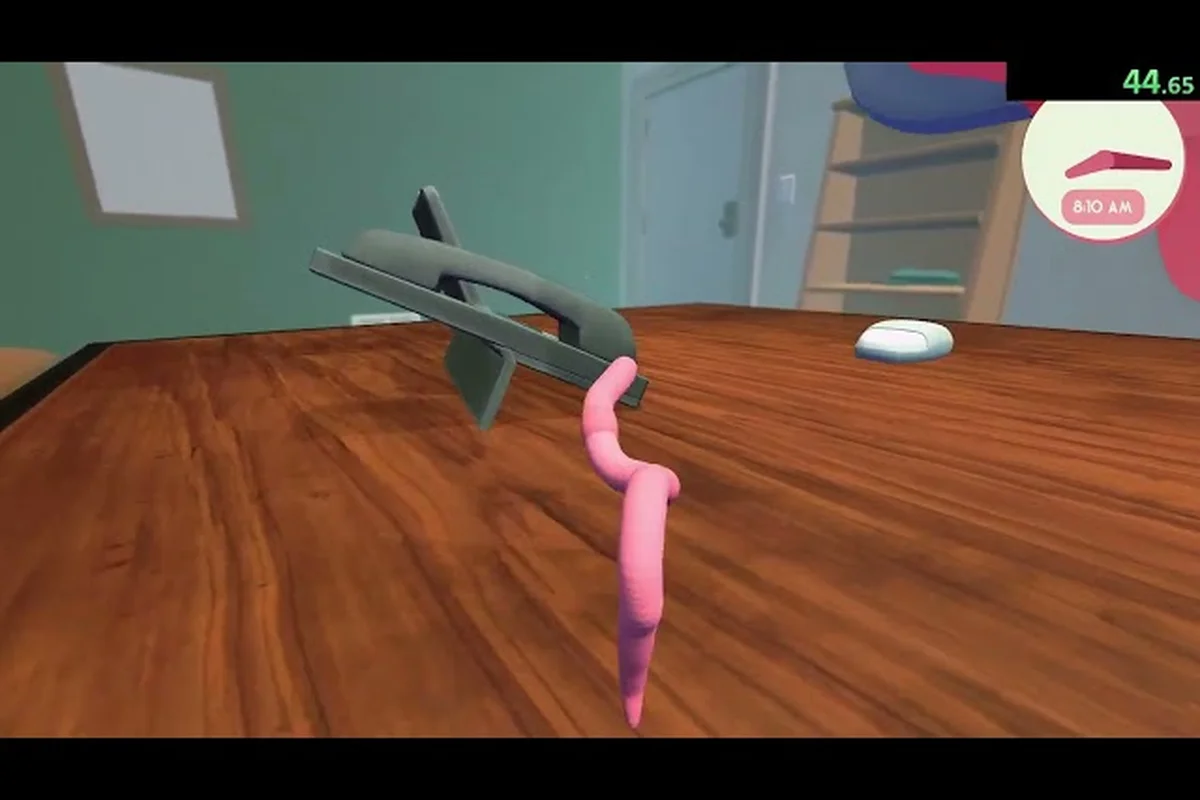
Worming from Home is a ragdoll job simulator from developer Zach Northrop where you play a junior financial analyst who happens to be a worm, and according to the official Worming from Home Steam page, you throw your spineless body around the keyboard to answer messages, fill out spreadsheets, invest, buy upgrades, and train skills on your way to a promotion. Training those skills is where most new players stall, because the game never explains how the Perk Tree actually compounds. Community feedback from the free demo on itch.io was Very Positive during Steam Next Fest, and a big reason is that the upgrade loop — gym sessions, reading, trinkets — feels genuinely rewarding once you understand it. This guide breaks down that loop so you stop wasting cash on the wrong upgrades.
Why Getting Swole Matters in Worming from Home
Muscle is not cosmetic. The Muscle Mass perk tree gates real gameplay advantages, and community reports consistently describe swole worms as completing desk tasks faster because a stronger body flings itself across the keyboard with more control. If you are chasing promotions, the swole route is one of the most reliable long-term investments available.
The core benefits break down like this: each one traces back to how the Muscle Mass stat interacts with the rest of the progression economy in worming from home. A worm that invests early in the gym workout guide loop converts cash into raw strength, which compounds — stronger fling physics mean fewer wasted movements per desk task, and fewer wasted movements mean more completed sessions before the in-game day ends. That compounding effect is why swole-focused players tend to pull ahead of worms who split their budget evenly across every system from the start, and why the payoff curve steepens noticeably once the mid-tier perk nodes come online.
-
Faster task completion — a beefier worm ragdolls across keys with more precision, which matters for the Spreadsheet and Messages App minigames
-
Perk synergy — Muscle Mass unlocks nodes that boost income and stamina, letting you chain more work sessions per in-game day
-
Promotion leverage — training skills is explicitly listed on the press kit as a promotion requirement, so skipping the gym delays your climb
-
Achievement access — several late-game achievements tie to maxed perk trees, including the muscle-focused ones covered in our Muscle Mass perk unlock guide
Before committing cash to any single branch, it helps to see how the four progression systems stack up side by side. The comparison below maps each system to its primary stat, cost structure, and ideal use case — note that gym workouts are the only option that directly raises Muscle Mass, while the Reading Nook upgrade and self-help books pull your build toward Financial Insight and mixed perk coverage instead. Interns sit apart entirely, converting recurring cash into passive output while you keep training. Use the table to budget your early in-game days: most swole-focused builds front-load gym sessions, then diversify once the mid-tier nodes unlock.
| System | Primary Stat | Cost Type | Best For |
|---|---|---|---|
| Gym workouts | Muscle Mass | Cash per session | Raw strength and task speed |
| Reading Nook | Financial Insight | Furniture + book costs | Stock market and income perks |
| Self-help books | Mixed perks | One-time purchases | Targeted boosts and achievements |
| Interns | Passive work output | Recurring cash | Delegating tasks while you train |
The key insight, based on community testing, is that these systems feed each other. Financial Insight perks raise your stock returns, stock returns fund more gym sessions, and gym sessions make your work faster. Players who ignore one branch usually hit a progression wall around the mid-game, which is why a balanced approach wins.
The Gym Workout Guide: Building Muscle Mass Step by Step
The gym is your primary tool for getting swole, and this Worming from Home gym workout guide covers how sessions actually work. Between desk tasks you can visit the gym and put your worm through workouts that convert cash into Muscle Mass points. Each session costs money, so timing your visits around payday matters more than most players realize.
How Gym Sessions Work
When you enter the gym, your worm interacts with workout equipment using the same ragdoll physics as the office. You fling your body at the equipment, complete the rep, and earn progress toward your Muscle Mass tree. Community players report that early sessions feel clumsy, but the ragdoll physics — which the Steam page bills as state of the art — become manageable once you learn to commit your whole body to each movement rather than half-tossing yourself at the weights.
A practical session routine looks like this: start by selecting a single Muscle Mass node to target, then fling your worm at the corresponding machine — the bench press rewards full-body commitment, while half-tossed attempts register as failed reps and waste the in-game day. Because each session consumes travel time to and from the gym, one concentrated workout per day outperforms several short visits, letting your cash savings fund upgrades like the reading nook instead of transit. Finish by reviewing which Perk Tree nodes unlocked, since a new perk can shift your optimal exercise before your next shift begins.
-
Answer your morning messages first — clear the inbox so no task timers expire while you train
-
Do one full gym session per in-game day — spreading cash across many tiny sessions wastes travel time
-
Bank stock profits before big gym pushes — a good trading day funds multiple sessions at once
-
Check the Perk Tree after every session — newly unlocked nodes often change which workout is most efficient
Muscle Mass Perk Priorities
Not every node in the Muscle Mass tree is worth rushing. Based on player experience, the early nodes that boost task speed pay for themselves fastest, while the deep-tree nodes that unlock the Absolutely Massive tier are a long-term project best funded by steady stock gains. The table below reflects community consensus on where to spend first:
| Priority | Perk Tier | Why It Pays Off |
|---|---|---|
| 1 | Early task-speed nodes | Immediate productivity gain every single day |
| 2 | Stamina and session nodes | More workouts per day without burnout |
| 3 | Income-linked muscle nodes | Muscle starts generating money passively |
| 4 | Absolutely Massive tier | Late-game flex with achievement value |
One warning from community reports: do not drain your bank account on gym sessions right before a stock dip. The market in Worming from Home moves, and players who keep a cash buffer can buy Technis Corp. shares on the dip instead of watching from the sidelines. Balance is the whole game here — a swole worm with an empty wallet is just a strong worm who still works weekends.
The Reading Nook Upgrade: Turning Books into Financial Insight
The Reading Nook is the intellectual half of getting swole, and this Worming from Home reading nook upgrade section explains why it deserves cash almost as much as the gym. Reading feeds the Financial Insight perk tree, which directly improves your stock market performance — and stock money is what funds your gym habit. The two systems are a single loop, not competing options.
Why the Reading Nook Pays for Itself
Every book you finish sharpens Financial Insight, and higher Financial Insight means better returns when you trade in-game stocks like Technis Corp. Community players describe the compounding effect clearly: an early Reading Nook investment of a few hundred dollars returns multiples over a playthrough because every improved trade funds more upgrades. The upgrade also unlocks a cozy corner of your home office, which fits the game's whole work-life-balance theme.
When planning your nook, keep these points in mind: the Reading Nook occupies a dedicated furniture slot in your home office layout, so measure your free space before committing — a tier-one nook pairs fine with a starter desk, but stacking it alongside the L-Desk and a full monitor rig can crowd the room and force awkward rearrangement later. Budget-wise, treat the nook as infrastructure rather than decoration: its cost is recouped through the Financial Insight gains that make each Technis Corp trade sharper, so prioritize placement near your workstation to keep the read-then-trade loop tight.
-
Buy the nook before expensive books — the furniture itself gates the reading system entirely
-
Pair reading days with market dips — finish a book, then apply fresh Insight to a buying opportunity
-
Upgrade the nook gradually — like the L-Desk on the work side, tiered furniture upgrades beat one big splurge
-
Read between deadlines — reading consumes free time, so slot it after clearing urgent tasks
Reading Guide: Which Books to Buy First
This Worming from Home reading guide ranks the book categories by payoff. Self-help books are one-time purchases with permanent perks, so unlike gym sessions, every dollar spent on a book keeps paying forever. That permanence is why players on the demo's community threads recommend buying books early even when cash feels tight.
| Book Type | Perk Tree Fed | Purchase Timing |
|---|---|---|
| Finance-focused reads | Financial Insight | As soon as the nook is placed |
| Productivity books | Work speed perks | After your first promotion push |
| Confidence/self-help | Mixed social and stat perks | Before coworker events and interviews |
| Deep-tree tomes | Late Perk Tree nodes | Once stock income is stable |
The self-help books deserve special attention because their perks reach beyond stats. Some books improve how coworkers respond to you, which matters if you are pursuing the romance line with M or trying to survive a Video Call with your boss Steve without getting chewed out. Our full breakdown of the self-help books and their perk effects covers the individual titles in detail, and the short version is that confidence books punch above their price tag for players who struggle with the interview minigame.
Self-Help Books Perks: The Hidden Multipliers
This section on Worming from Home self help books perks digs into why books are arguably the best value-per-dollar in the entire upgrade shop. Gym sessions are recurring costs, interns are recurring costs, but a book is a single purchase that permanently installs a perk. Over a full playthrough, that permanence makes books the cheapest stat growth available.
When you crack open a self help book in Worming from Home, the perk you unlock lands in one of three categories, and knowing which is which changes your whole purchase order. Stat perks compound with every gym session and reading session you run afterward, work perks convert shop time back into free time you can spend on the reading nook, and social perks smooth out the coworker interactions that otherwise drain your energy. The category a book belongs to is listed right in the shop description, so check it before buying rather than treating all books as interchangeable stat growth.
The three perk categories also differ in how early they pay off, which matters when your budget in the upgrade shop is tight during the first week of a run. Stat perks are the slow burn: a book that boosts Muscle Mass gain shows almost no visible change after one gym session, but by week three the same session count leaves you noticeably further along the swole progression bar than an unbooked run. Work perks front-load their value instead — faster Spreadsheet and Printer handling immediately shortens your workday, and every hour shaved off a shift is an hour the reading nook or gym can absorb. Social perks sit in the middle, paying off gradually as coworker encounters stack up over the week. If you can only afford one book early, match it to your bottleneck: buy a stat book if your gym sessions already feel efficient, but grab a work perk first if long shifts are crowding out your training time entirely.
-
Stat perks — direct boosts to Muscle Mass gain rate or Financial Insight accumulation, meaning books literally make your gym sessions and reading sessions more efficient
-
Work perks — faster Spreadsheet and Printer task handling, which frees more free time for training
-
Social perks — improved coworker interactions, useful for flirting, networking, and dodging Steve's worst moods
Because stat perks multiply your other upgrades, the community consensus is to buy at least one stat-boosting book before heavily investing in gym sessions. A book that raises Muscle Mass gain by even a modest percentage compounds across every workout you do for the rest of the run, whereas a single extra gym session is just one session. Think of books as buying a better engine instead of buying more fuel.
There is also an achievement angle. Several perk-related achievements require you to read broadly rather than deeply, so players chasing 100% completion should rotate book types instead of buying five finance books in a row. The demo's shop also stocks trinkets, and while trinkets are mostly cosmetic or minor boosts, a few pair well with a reading build by boosting stats earned during free-time activities.
Balancing Gym, Reading, and Work Without Burning Out
Time management is the real boss fight of Worming from Home. Every in-game day gives you limited hours, and every hour spent flinging yourself at gym equipment is an hour not spent on spreadsheets, trading, or interns. This section lays out a daily schedule that keeps all three systems progressing, based on patterns players have shared since launch.
A sustainable daily loop looks like this, and the reasoning behind the order matters as much as the slots themselves: Muscle Mass gains scale with how many gym sessions you can afford per in-game day, while Financial Insight only compounds if you trade regularly, so the schedule below front-loads reputation-critical desk work and saves low-energy hours for reading. Players who reverse this order — training first, tasks last — routinely hit expired deadlines and stall at the same promotion tier for a week, which is exactly the burnout spiral this section is designed to prevent.
-
Morning: clear urgent tasks — messages and deadlines first, because expired tasks cost reputation with Steve
-
Midday: one gym session — cash permitting, train while your energy is still high
-
Afternoon: finish desk work and check stocks — trade with whatever Financial Insight you have banked
-
Evening: read or socialize — alternate reading nights with coworker nights so neither system starves
The interns system changes this math significantly. Buying interns — ten of them unlocks the Valuable Work Experience milestone — delegates work output so you can spend more of your day training. Just be careful with the Establish Dominance achievement, which requires throwing an intern away, because interns are an investment you do not want to waste casually. Our intern buying guide explains how intern upgrades work and whether they are permanent, and the practical takeaway is that interns are best purchased once your stock income covers their cost without stress.
Here is a sample weekly budget that keeps swole progress on track. The key insight is that your in-game cash flow dictates how aggressive you can be with gym sessions: early on, when Financial Insight is low and stock trades barely move your balance, one Midday gym session per day is often all you can sustain without dipping into the funds you need for desk upgrades. Once trading income stabilizes — typically after a few "Buy the dip" cycles on Payday — you can afford double sessions on light-workload days, which is where the real Muscle Mass acceleration happens. The budget below assumes you have already covered intern costs, since delegating desk work frees the Afternoon slot that would otherwise eat into your training energy.
| Day Focus | Gym Sessions | Books | Trading |
|-----------|--------------|-------|---------|
| Day Focus | Gym Sessions | Books | Trading |
|---|---|---|---|
| Payday | 2 | 0 | Buy the dip |
| Task-heavy | 1 | 0 | Hold positions |
| Light workload | 2 | 1 | Review portfolio |
| Free day | 1 | 1 | Research before buying |
The exact numbers flex with your promotion requirements, since each rank raises the bar for task output. If you are unsure what your next promotion demands, our upgrade priority guide breaks down promotion requirements and which desk upgrades like the L-Desk are worth it at each stage. The core principle stays constant though: never let gym progress stall for more than a day or two, because Muscle Mass is the slowest stat to rebuild once you fall behind.
Advanced Swole Strategies for Late-Game Worms
Once your Muscle Mass tree is deep and your Reading Nook is fully upgraded, the optimization game shifts from "train more" to "train smarter." Late-game players focus on three advanced levers, and each one assumes you already have the basics from earlier sections running smoothly.
First, stack multipliers instead of stacking sessions. A late-game worm with stat-boosting books, deep Financial Insight, and passive intern income earns more per gym session than an early worm doing twice the sessions, so the endgame is about buying percentage boosts rather than grinding raw reps. Second, time your Absolutely Massive push around a strong stock run — community players report that funding the final muscle tiers with a single well-timed Technis Corp. rally feels far better than slogging through ten lean in-game weeks. Third, use free-time activities strategically, because the game's work-life-balance systems mean recovery activities can indirectly support training by keeping your worm's mood high enough to perform well at the gym.
A few final numbers worth knowing, as of the September 2026 launch window: the "Welcome to Corporate Finance" achievement — simply logging in to your computer — sits at a 100% unlock rate according to Steam's global stats, which tells you nearly every player starts this journey, while the deep perk achievements sit at far lower rates. That gap is your opportunity. Most worms never get swole because they quit the loop too early, and if you want to see the whole upgrade loop in motion before committing, StayWeird Gaming's video "Worming from Home is The Weirdest Job Simulator I've Ever Played" shows the gym, reading, and ragdoll desk gameplay in action.
The path to getting swole in Worming from Home comes down to one compounding loop: gym sessions build Muscle Mass, the Reading Nook and self-help books multiply your gains and your income, and stock profits fund the whole operation. Buy the Reading Nook early, prioritize task-speed muscle nodes, keep a cash buffer for market dips, and let interns handle the busywork once you can afford them. Follow that loop consistently and your spineless little analyst will be Absolutely Massive before the final promotion lands.
Frequently Asked Questions
How do I get swole in Worming from Home?
Getting swole means repeatedly completing gym sessions to fill the Muscle Mass perk tree. Visit the gym between desk tasks, spend cash on one full session per day, and buy stat-boosting self-help books first so every workout earns more progress. Stock profits from Financial Insight perks fund the long grind.
Is the Reading Nook upgrade worth the money?
Yes, and it pays for itself faster than almost any other purchase. The Reading Nook unlocks the Financial Insight tree, which improves your stock market returns, and those returns fund gym sessions and furniture upgrades. Community players consistently rank it among the best early investments in the game.
Which self-help books should I buy first?
Buy stat-boosting books first, specifically ones that increase Muscle Mass gain or Financial Insight accumulation, because their effects multiply every future training session. After that, productivity books that speed up desk tasks free more time for the gym, and confidence books help with coworker events and interviews.
Do gym sessions in Worming from Home cost money every time?
Yes, each gym session costs cash, which is why session frequency matters more than session size. Players recommend banking stock profits before heavy training weeks and keeping a buffer so a market dip never forces you to skip workouts. Interns help by covering work output while you train.
Can I max every perk tree in one playthrough?
Yes, but it requires disciplined time management across the whole run. The Perk Tree systems compound, so players who balance gym sessions, daily reading, and steady investing can max Muscle Mass and Financial Insight before the endgame. Rushing one tree while ignoring the other usually stalls progress mid-game.